
Ninety

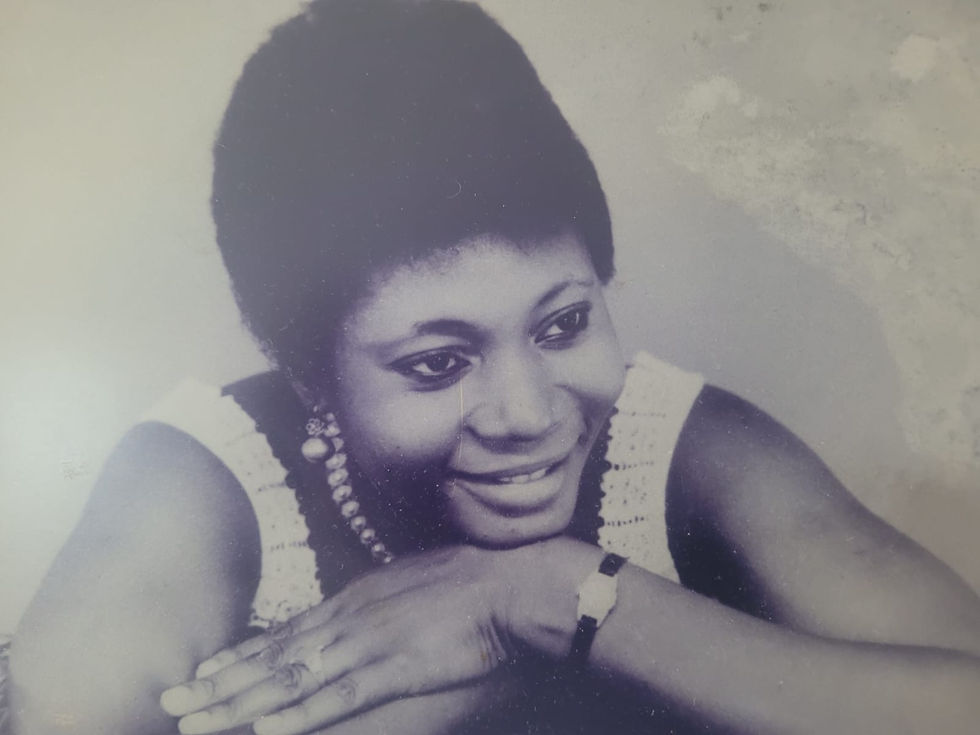
On the twenty-second of October, my mother would have turned ninety.
I had imagined that birthday for years. I had imagined the outfit — hers, not mine; she would have chosen it months in advance and changed her mind twice. I had imagined the coral beads, the gele tied high, the phone calls from three continents, the way she would have pretended not to enjoy the fuss and enjoyed every single second of it.
Instead, it was her first heavenly birthday. She left us this year, in the autumn, and I am still learning how to write the word was about her.
I say was, but I do not believe she is gone. My faith has always told me that this earth time is a visit, and that when it ends, we go back home. Mommy simply got there first. I miss her with my whole body. I do not fear for her for a second.
I want to tell you about Mommy this week, because you cannot talk about elderhood with me for long before she walks into the room. She was the first elder I ever studied. I just did not know, for most of my life, that I was studying.
Some of you will know that my relationship with my mother was not simple. I have written here before about the wound that began when I was left behind in Nigeria as a baby — that old, quiet conviction that you are the one who gets left. I am not going to pretend that a death tidies all of that away. It does not. Grief, it turns out, is not a sentimental editor. It keeps the hard chapters in.
But grief does something else, too. It changes the angle of the light. And from where I stand now, I can see things about my mother that I was too close, or too hurt, or too busy, to see before.
I can see a woman who travelled further than any map she was born with. Who built a life in a country that did not always want her, and stood up anyway, and helped build things that other people still lean on. Who held her dignity like a full cup carried across a crowded room — never spilling, never hurrying.
I can see that she was an elder long before she was old.
In 2018, she visited me in Australia. I remember watching her in rooms full of Australian women—women she had never met, whose lives looked nothing like hers—and noticing how they leaned toward her. She did not perform. She did not try to be liked. She simply sat there being entirely herself, with no apology for her age, her accent, her opinions or her jewellery.
Something in me cracked open that year. I thought: why do we not have this here? Where are the women who are allowed to be like this?
Silver Sirens was born that same year. I have told the story of how purpose chose me. What I have not always said clearly enough is that it chose me through her. My mother was the founding member of a community she never joined.
Since she died, I have become the matriarch of our family. No one hands you this title with a ceremony and a sash. It simply arrives one morning, the way the phone calls start coming to you instead of to her. The questions. The decisions. The gentle weight of being the one who is now expected to know.
I do not always know. But I am learning that she did not always know either. She simply understood that an elder's job is not to have every answer. It is to stay steady enough that other people can find theirs.
One way I have stayed close to her is through her language. I am learning Izon — Ijaw, our language — slowly, clumsily, at an age when my tongue does not bend the way it once did. It is humbling. My pronunciation would make her laugh, then she would correct me, then laugh again. But every word I learn feels like I am walking back up the river towards her.
A Yoruba proverb on one of our Elderhood Cards says, "However far the stream flows, it never forgets its source." I have flowed a long way from where I began—across countries, careers, versions of myself. But the source still moves in me. I hear her in how I end an argument. I see her in my hands. I catch her in the mirror when I put on my coral and stand a little straighter without being asked.
My mother did not teach me how to grow old. She taught me how to grow into it.
Ninety years. I got to witness so many of them. And I intend to spend the rest of mine making sure the library she carried does not burn.
Happy heavenly birthday, Mommy.
With love,
Faith

Routines and Rituals That Held Me This Week
My Izon practice.
A few minutes most mornings, before the kettle has finished its business, I stand in my kitchen and say a handful of new words out loud to no one. I am learning it slowly, unevenly, a woman past sixty with a degree behind her, stumbling over sounds a toddler in the Delta would manage without thinking. Some days I get through a whole little conversation with myself. Some days I only manage a greeting.
That is enough.
Because I have come to understand what I am really doing in that kitchen. I am not studying. I am calling home. Izon was the sound of my mother’s voice when she was cross, when she was laughing, when she was on the phone to her sisters and thought I wasn’t listening. It was the language underneath the language she used with me. And now that she has gone back home, it is the closest thing I have to our phone calls — except that, unlike our real phone calls, she cannot hang up on me first.
Something about saying the words aloud matters. Read silently, they stay on the page. Spoken, they fill the room, and for a moment the room is not quite so empty. I mispronounce them, and I can almost hear her correcting me — that particular sigh, half exasperation, half delight that I’m trying at all.
The week she would have turned ninety, I said good morning to her in her own tongue every single day.
Some of us inherit land, some of us inherit gold. I am inheriting a language, one word at a time, and it is the richest thing she left me.


Comments